A framework to get better results from AI in PR & comms
Lay The Groundwork, Build The Campaign and Run a Governance Check

A frequent frustration is that AI often creates as much work as it saves. You ask for a press release and get something that sounds like everyone else’s press release. You try for a campaign plan and get something generic that needs pulling apart before it is any use.
The problem is not necessarily the tool (although sometimes it very much is!) but the approach. Without the right structure going in, even the best prompt and tool will produce something that’s passable but doesn’t set the world alight. And it often takes longer to fix than it would to start from scratch.
At our last free Lunch and Learn, Big Fish Training partner Michael MacLennan did a live demo of a framework he’s developed for building a complete comms campaign using AI.
His process breaks down to five prompts:
- Create the campaign Project and generate Instructions
- Build the Foundational Comms Structure
- Turn tone of voice into a reusable Skill
- Channel plan and eight content angles
- Draft six assets in a single pass
Plus, at No,.6, the "Governance pass".
Michael has, very generously, published detailed instructions including prompts on his Comms with AI website. When you have time, head over there and work through them yourself. Right now, read on for an executive briefing on some of the key points.
Michael will be running two half-day open courses on AI in early July, for those who want to dig a bit deeper. They are, as you would expect from Big Fish Training, light on theory and heavy on practical tips! Priced at £249+VAT per place, this is a rare opportunity to book individual places instead booking of an in-house course for a whole team. More details and link to book here.
And, looking even further ahead, scroll down for details of our next free Lunch and Learn.
Lay The Groundwork First
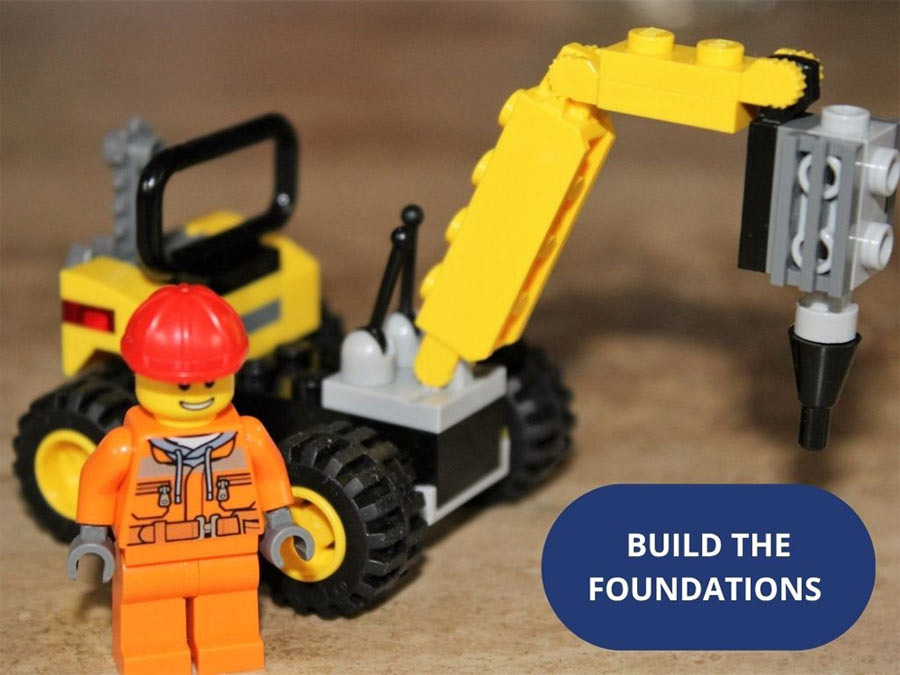
We know that when we open up an AI tool and start typing, the outcome can be underwhelming to say the least. The problem is that the output is only as good as the context you give it. A vague prompt produces a generic response.
Michael recommends two steps before drafting anything. First, generate a proper brief. You can use whatever you have (the transcript of a discovery call, a written client brief, background notes, etc.) and ask your tool to produce a detailed brief from it. Then, ask it to list the assumptions it has made. This step alone is a time saver, as it reveals anything that needs correcting before it travels through the rest of the campaign
Secondly, use the brief to build a foundational comms structure containing your objective, primary and secondary audiences, key messages, tone of voice rules and risks to avoid. Save this to your project folder so that every piece of content you produce from this point draws on it automatically.
The tone rules section is worth particular attention. Identifying two or three reference brands whose voice matches what you are aiming for gives the tool something concrete to work with and noticeably sharpens the output.
Build The Campaign
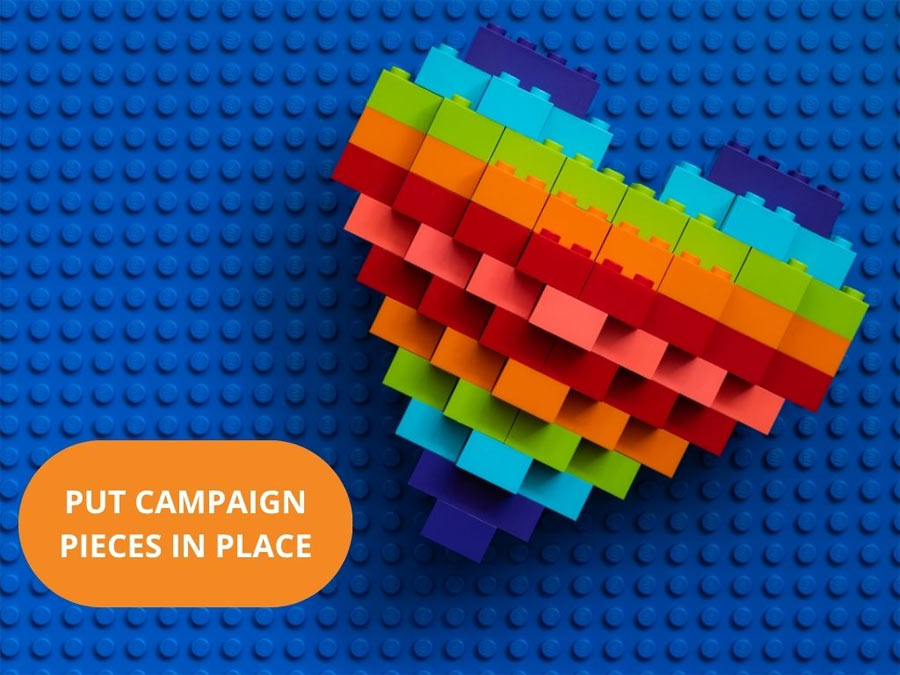
With the foundational comms structure in place, ask your tool to develop a channel plan and set of content angles. A good prompt here will produce a mix of channels and several angles mapped to funnel stages. For a B2B campaign, you might get eight options from awareness to conversion.
The point is not to use all of them! Choose one or two that feel specific and direct and speak to audience problems. Once chosen, these angles should also be saved alongside the foundational comms structure.
Next ask your tool to draft the assets, whether a LinkedIn post, carousel copy, prospect email, press release or internal communication. Because your brief, comms structure and tone rules are already saved, the output should be considerably more coherent than if you’d started from a blank page.
That said, whatever comes back is a draft, not a final version! You’re going to want to read it carefully, watch for language that feels generic, off-brand or screams “AI” and make the necessary tweaks accordingly.
The Governance Review
Before anything goes to a client or stakeholder, do run your draft assets through a governance check. This is arguably the most important step but one that is frequently missed.
Ask the tool to review the content against your foundational comms structure and flag anything that doesn’t hold up: assumptions that need verification, claims that are vague or statements that could create reputational risk. Ask it to rate the severity of each issue and suggest rewrites for the most significant ones.
You can also ask your tool to create a pre-publication checklist tailored to the campaign. This is particularly useful when content is going through multiple sets of eyes or when you need to demonstrate to a client that due diligence has been done.
None of this replaces a thorough human review before publication but it gets the draft materials to a much higher standard before that review takes place, which means fewer rounds of changes, less time to approval and less risk of something slipping through.
Next “Lunch & Learn” Webinar
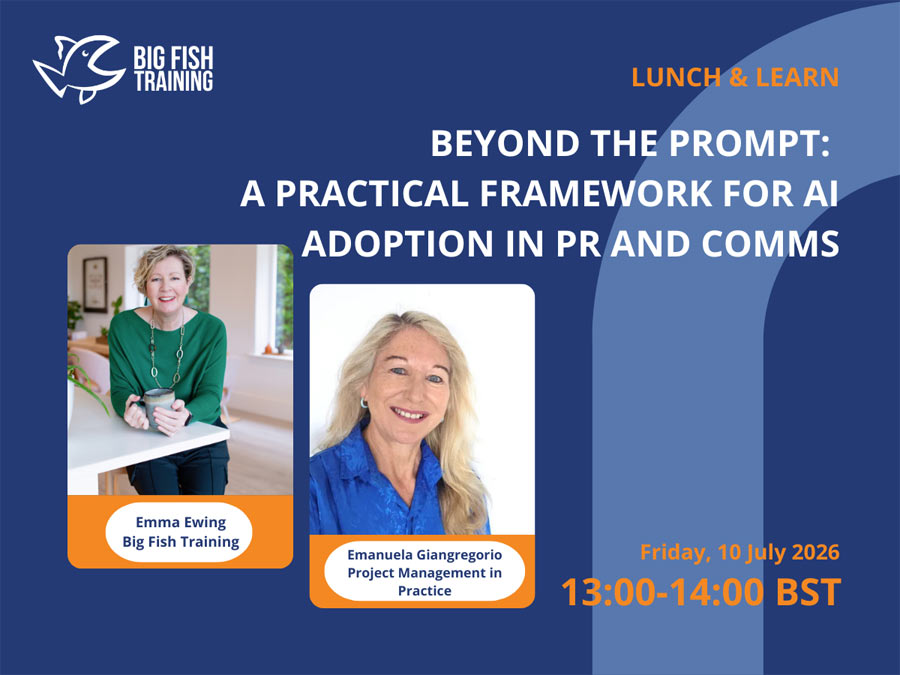
Most PR and comms teams have moved well past experimenting with AI. The bigger challenge now is being strategic about it: how do you decide which tools to adopt, how do you embed them across a team, and how do you make sure the way you're using AI is something you can defend, repeat and scale?
Join us for a free Lunch and Learn with special guest and Big Fish Training partner Emanuela Giangregorio, international trainer, management consultant and creator of the AI Project Governance Framework, accredited by APMG International.
In this session, Emma and Emanuela will explore five core values that provide the glue for scaling AI adoption, and what they mean in practice for PR and comms teams. We'll look at how you approach deciding which AI tools to bring into your workflow, who's accountable for the output, and how you move from ad hoc AI use to something your whole team can own and grow.
Register here. We look forward to welcoming you.
Further Reading


How Big Fish Training Works
Got a team to train? Most courses are delivered direct either in person or via live video for groups of 6 - 12 people. These sessions are tailored to your specific needs. You just need to tell us what they are! Get in touch now for a friendly chat about what you need to achieve.
Want a course just for you? We run special sessions throughout the year and have a growing number of online courses. If you can't find what you need on the site, get in touch now and we can help.
Read More
Sign up for The Hook
Get notified about our next webinar